
Businesses are constantly seeking ways to improve their online visibility and drive more traffic to their websites. One of the most effective strategies for achieving this is Search Engine Marketing (SEM). SEM is a digital marketing approach that involves increasing your company’s visibility on search engine results pages (SERPs) through paid advertising and organic search optimization.
Unlike organi search engine optimization (SEO) alone, SEM combines the power of both paid search ads and SEO tactics to maximize search visibility and target potential customers more effectively.
With billions of searches happening on Google and other search engines every day, a well-executed SEM strategy can drive high-quality traffic, increase conversations, and prove a measurable return on investment (ROI).
In this guide, we’ll walk you through the core components of SEM, how it can benefit your business, available tools and platforms, and best practices to help you create a successful SEM campaign in 2025.
Understanding SEM Components
Before we dive into the “how” of SEM, it’s helpful to further define the two main components of this strategy: paid search advertising and organic search optimization. Both of these elements work together to increase your brand’s online visibility and drive targeted traffic.
Paid Search Advertising (PPC)
Paid search advertising, commonly known as pay-per-click (PPC), is a model where advertisers bid on keywords to get their ads to appear at the top of search engine results. The most well-known platform for PPC advertising is Google Ads, but other platforms like Bing Ads and Yahoo Ads also offer similar services.
Once a PPC campaign is in place, your business can start showing up at the top of the search results immediately.
Key aspects of PPC advertising include:
- Keyword targeting: Advertisers choose specific keywords or phrases that match what potential customers are looking for. This also includes the use of negative keywords, which filters out keywords that you don’t want your ads to show up for.
- Bidding strategies: PPC uses bidding strategies to determine how much advertisers are willing to pay for each ad click or impression and how Google allocates your ad spend. Some common strategies include:
- Cost-Per-Click (CPC): Paying for each click the ad receives.
- Cost-Per-Thousand-Impressions (CPM): Paying for every 1,000 times the ad is displayed, regardless of clicks.
- Enhanced CPC: Google automatically adjusts the bid based on the likelihood of a conversion, aiming to improve the return on ad spend (ROAS).
- Ad placement: Where your ads show up in the search results is determined by how much you pay in relation to other advertisers and the relevance of your ads and website to the search itself.
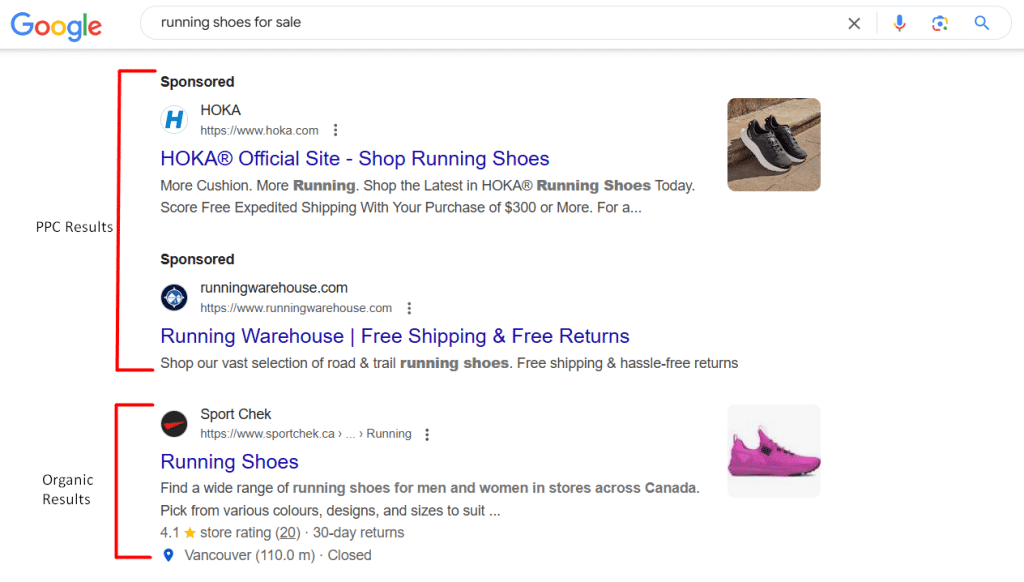
For example, if a business bids on the keyword “running shoes for sale,” their ad can appear when users do a Google search for that phrase. If someone clicks on the ad, then the business pays a fee based on their bidding strategy (i.e. how much they are bidding for that specific keyword).
Organic Search Optimization (SEO)
While PPC focuses on paid ads, SEO involves optimizing a website’s content structure to rank higher in organic search results (which typically appear below the ads in the search).
 SEM v/s SEO
 SEM v/s SEO
SEO differs from paid advertising in that you don’t pay an advertising platform like Google to display your website on search results. It relies on optimizing your website through specific techniques, like:
- Keyword research: Identifying the right search terms to target based on search volume and competition.
- On-page optimization: Optimizing elements like meta titles, meta descriptions, header tags, and internal linking.
- Content Quality: Producing high-value, engaging content that matches search intent.
- Technical SEO: Improving site speed, mobile responsiveness, and indexing.
- Backlink Strategy: Building high-quality backlinks to improve domain authority.
Also, while PPC can get a website to appear on Google immediately, it’s important to note that SEO takes time to start seeing results–which is why these two strategies complement one another so well. Ultimately, SEO is a fantastic long-term strategy that provides a much larger ROI over time, but PPC is a good strategy to jumpstart your SEM efforts from the get-go so you can see results right away.
Learn More About SEO: Optimize Your Website For SEO: The Ultimate Guide
Benefits of Implementing SEM Strategies
SEM offers some key advantages that can help businesses grow their online presence and drive conversions (i.e. forms filled, calls, or new customers) more effectively.
Enhanced Visibility in Search Results
The top 10 search results on Google get more than 86% of the clicks from searches. The number 1 position gets 27.6% of the clicks, and only about 0.63% of Google searchers click on something on the second page.
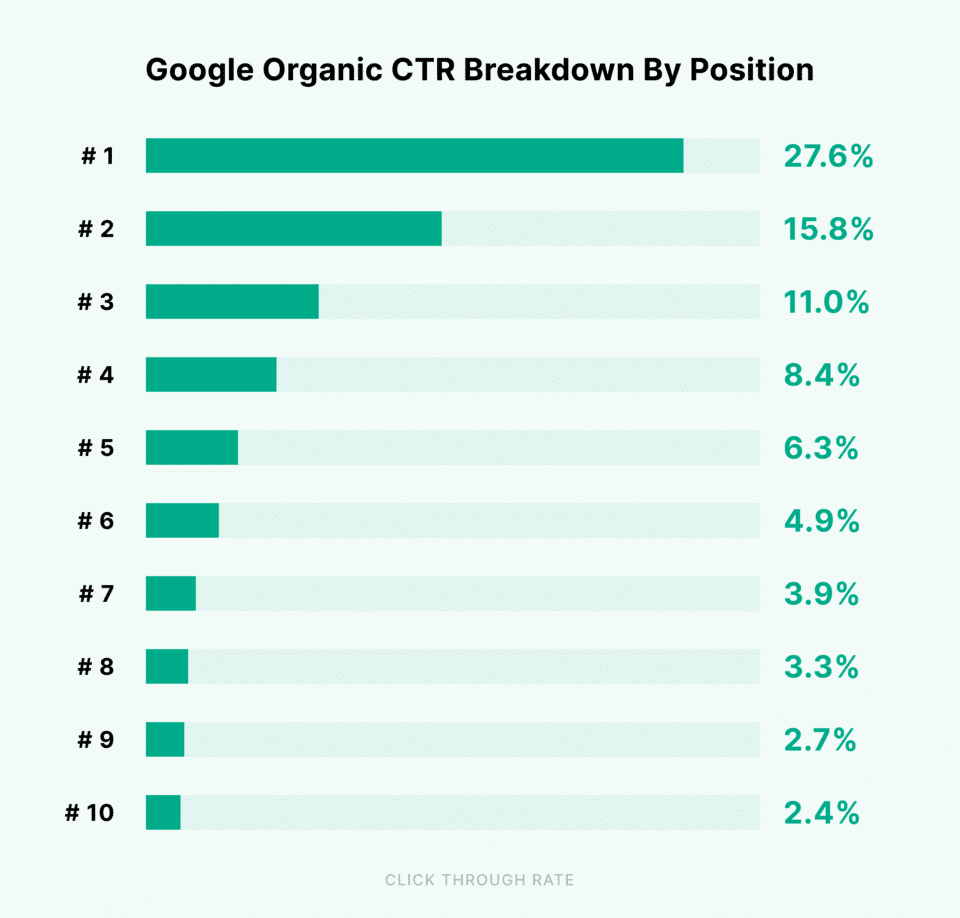
Source: Backlinko
SEM helps businesses rank in these prime positions in the search results, increasing the likelihood that potential customers will notice and engage with their brand. By combining paid ads and strategic SEO, businesses can increase their chances of ranking at the top of search results and standing out from the competition.
Paid ads appear at the top of SERPs, giving them priority over organic listings and increasing the chances of getting clicked.
Local SEO helps businesses target nearby customers by focusing on location-based searches and using tools like Google Business Profile.
Featured snippets allow well-optimized content to appear in answer boxes or rich snippets (with extra details like reviews and links) that help businesses stand out and establish authority for specific topics or keywords.
Targeted Audience Engagement
SEM allows businesses to reach specific audiences based on detailed targeting options, increasing the chances of connecting with the right customers at the right time.
- Demographic targeting: Platforms like Google Ads and Bing Ads let businesses target users based on age, gender, income, and other demographic factors, ensuring ads reach the most relevant audience.
- Intent-based targeting: You can display your ads to users who are actively searching for your products or services, increasing the likelihood of conversions.
- Retargeting: Businesses can re-engage users who have previously interacted with their website or ads, reminding them of products and encouraging them to complete a purchase.
- Dynamic search ads: Search engines can automatically generate ads based on website content, targeting highly relevant search queries without needing to manually select keywords.
SEM Tools and Platforms
To execute a successful SEM strategy, you need to use the right tools and platforms for managing both PPC and SEO efforts.
Google Ads and Alternatives
Google Ads is the dominant platform for paid search, but other platforms also offer valuable options for PPC campaigns.
| Platform | Key Features | Strengths |
| Google Ads | Keyword Planner Performance Tracking Audience Targeting | High traffic volume and advanced targeting options |
| Bing Ads | Advertises across Bing, Yahoo, and AOL Imports Google Ads campaign | Lower cost and lower competition |
SEO Tools for Organic SEM
For SEO, using the right tools helps with keyword research, performance tracking, and site optimization, ultimately improving both organic rankings and the overall SEM strategy.
- SEMrush: A comprehensive SEO tool that allows businesses to perform in-depth keyword research, conduct detailed site audits, and analyze competitors’ strategies. SEMrush also provides backlink analysis and tracks rankings, making it a versatile platform for managing all aspects of SEO.
- Ahrefs: Known for its strong backlink analysis capabilities, Ahrefs helps businesses track backlinks, identify link-building opportunities, and monitor competitor link profiles. It also offers keyword tracking, content research, and performance analysis.
- Google Search Console: A free tool for monitoring site performance in Google search results. It provides insights into indexing status, search visibility, and website health. Google Search Console also helps with tracking keyword performance, optimizing content, and identifying technical SEO issues.
- Moz: Offers tools to track rankings and monitor website health, while providing keyword suggestions and optimization tips. Moz’s suite of tools helps businesses analyze their site’s performance and improve their overall SEO strategy with actionable insights.
Best Practices for Effective SEM Campaigns
To maximize the success of your SEM efforts, it’s essential to follow best practices that ensure your campaigns are effective, relevant, and optimized for both search engines and users.
Keyword Research and Optimization
Effective keyword research is the foundation of any successful SEM campaign. Focusing on the right keywords ensures that your ads are targeting the right audience and aligning with user search intent. Proper optimization also helps to improve your campaign’s quality score, making it more cost-effective.
- Focus on Long-Tail Keywords: These are specific phrases that reflect user intent and often have lower competition, making them more affordable while driving targeted traffic.
- Use Latent Semantic Indexing (LSI) Terms: LSI terms help to create content that is contextually relevant, improving the overall quality of your ads and landing pages, and signaling to search engines that your content covers the topic comprehensively.
- Maintain Natural Keyword Integration: Avoid overloading your ads or landing pages with too many keywords (keyword stuffing), as it can result in penalties from search engines. Focus on natural and relevant usage of keywords to enhance readability and user experience.
Content Quality and User Experience
The quality of your content and the experience you provide to users are critical to the success of your SEM campaigns. Search engines prioritize content that provides value and answers user queries effectively. A positive user experience can lead to higher engagement and conversion rates.
- Write Clear, Engaging Content: Ensure your ad copy, landing pages, and other content are clear, concise, and directly address the search intent of the user.
- Ensure Mobile Responsiveness and Fast Loading Times: With more users browsing on mobile devices, having a responsive design is essential. Slow-loading pages can lead to high bounce rates, affecting your SEM performance and rankings.
- Use Structured Data (Schema Markup): Implementing schema markup helps search engines understand the content of your pages better and can result in rich snippets, which can improve visibility and click-through rates (CTR) on SERPs.
Common SEM Challenges and Solutions
While SEM can be highly effective, it comes with certain challenges that marketers should be aware of in order to ensure long-term success.
Ad Fatigue and Budget Management
As SEM campaigns progress, users may start to overlook repetitive ads, leading to decreased engagement and diminishing returns. Managing budgets effectively can also be a challenge, especially when trying to maximize ROI.
Solution:
- Rotate Ad Creatives Regularly: To avoid ad fatigue, keep your ads fresh by updating visuals, copy, and offers. This helps maintain user interest and increases engagement rates.
- Use Audience Segmentation and Dynamic Ads: Segmenting your audience allows you to create more personalized ads, enhancing relevance to individual users. Dynamic ads can automatically adjust to match user intent, keeping your messages timely and impactful.
- Set Daily and Monthly Budget Caps: Prevent overspending by setting caps on your daily and monthly budgets.
Algorithm Updates and Adaptation
Search engine algorithms, such as Google’s BERT and RankBrain, are constantly evolving, which can have an impact on SEM performance. Marketers need to stay agile and adjust their strategies as these algorithms change.
Solution:
- Stay Updated with Algorithm Changes: Regularly monitor updates from search engines to understand how they impact your campaigns.
- Focus on Creating High-Quality Content: Google’s evolving algorithms reward content that provides value and addresses user intent. By focusing on creating high-quality, relevant content, you ensure that your ads remain competitive in search results.
- Monitor Performance Metrics and Adjust SEO Strategies: Keep an eye on your SEM performance metrics. If you notice a drop in performance after an algorithm update, adjust your keywords, content, or bidding strategies to align with new algorithm priorities.
Boost Your Digital Presence with Expert SEM Strategies
A well-crafted SEM strategy combines the immediate benefits of PPC with the long-term value of SEO, helping your business stand out in competitive search results. By targeting the right keywords and optimizing your content, you can drive high-quality traffic and increase conversions.
If you’re ready to elevate your search engine marketing efforts, Asset Digital Communications can help you create and execute a winning SEM strategy. Contact us today to start seeing measurable results.